
Current reports and studies related to human rights and democracy in Europe serve as foundational knowledge for informed discussions.
Reports of the EU and Council of Europe institutions and scientific studies of European organisations in the diverse and complex fields of human rights and democracy shed light on pressing issues that concern people in Europe and influence European societal cohesion. From analytical examinations to historical analyses and contemporary perspectives, the selected publications provide profound insights into the challenging tasks our European societies face in addressing existing prejudices and stereotypes.
The selection aims to foster a thorough understanding of the highly relevant challenges in the realm of human rights and democracy, stimulate discourse on the need for change and progress, create open spaces for discussions, highlight areas for improvement, and facilitate collaborative efforts to develop the best just, inclusive, and sustainable solutions for current and future societal challenges.
You can download all publications or simply view them directly here:
- NaDiRa Monitoring Report 2025: Hidden Patterns, Visible Consequences. Racism and Discrimination in Germany
- Discrimination Against People from Eastern Europe
- Annual Report 2025 of Germany’s Federal Anti-Discrimination Agency
- Being Muslim in the EU. Experiences of Muslims
- EU Survey on Immigrants and Descendants of Immigrants
- Gender equality in Europe: a still imperfect model in the world
- Gender Equality Index 2022, The COVID-19 pandemic and care
- State of Democracy, Human Rights and the Rule of Law
- Human rights report on the right to work
- The networks and narratives of anti-refugee disinformation in Europe
- Fear and lying in the EU: Fighting disinformation on migration with alternative narratives
- The impact of disinformation campaigns about migrants and minority groups in the EU
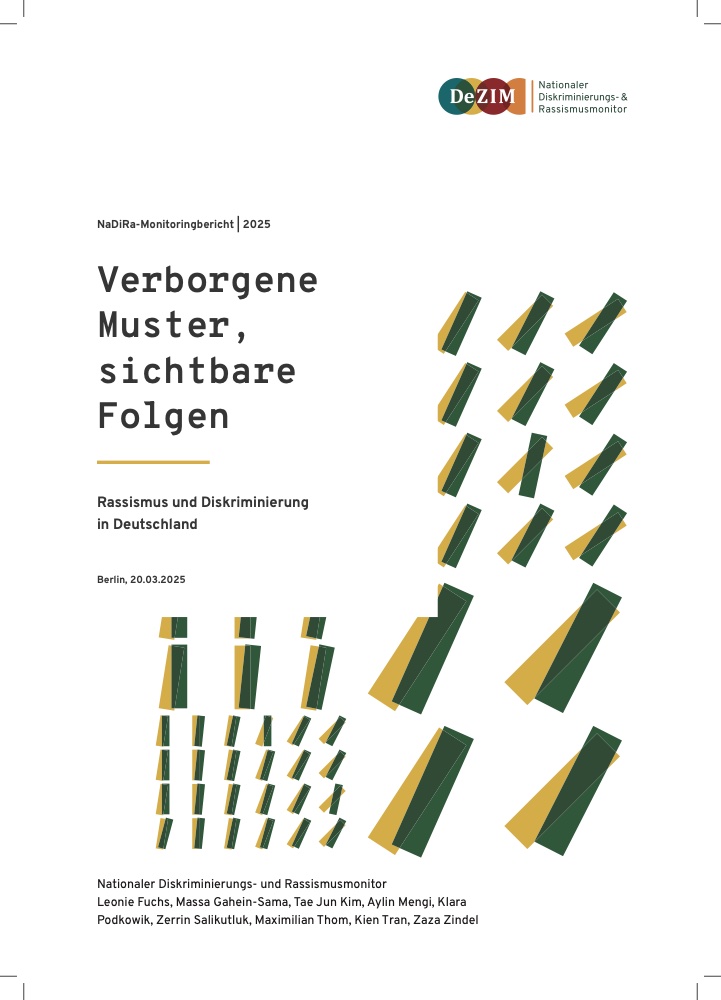
NaDiRa Monitoring Report 2025: Hidden Patterns, Visible Consequences. Racism and Discrimination in Germany
Discrimination and racism are not marginal phenomena: they permeate social structures and shape individual lives. Their effects are evident both in everyday experiences and in political and social developments. The 2025 Monitoring Report of the National Discrimination and Racism Monitor (NaDiRa) shows that racist attitudes remain widespread in German society. These developments do not occur in a vacuum. Political crises, economic uncertainty, and social polarization create a climate in which racist narratives gain traction. The findings also show that discrimination is part of everyday life for many people and is associated with poorer mental health and lower levels of trust in society and its institutions. Racism is therefore not merely a matter of individual prejudice; it is also a structural problem that threatens social cohesion and systematically limits the participation of certain groups.
According to the report, 36 percent of people in Germany believe that there are “different human races.” Another 36 percent believe that certain cultures are “more advanced and better” than others, while 48 percent say that some groups are “naturally more hardworking” than others. Forms of racial hierarchy based on supposed biological differences thus remain widespread, despite having been scientifically disproven. Terms such as “cultures” or “groups” are, however, increasingly used in place of “race.” Racist and discriminatory experiences are part of everyday life for many people in Germany, particularly for people who are racialized—that is, perceived as “foreign” or “different” because of certain outward characteristics. The report refers in particular to people of color and people visibly identifiable as Muslim. According to the study, 25 percent of Black people and 17 percent of Muslim people report being insulted, harassed, threatened, or attacked at least once a month. Around one third of each group report having experienced such incidents in the preceding twelve months.
Discrimination has far-reaching effects that extend well beyond individual experiences of exclusion and have implications for society as a whole. The report shows that exclusion shapes not only personal lives but also the extent to which people can participate in society. This is particularly evident in mental health: racialized groups show significantly higher levels of distress associated with anxiety disorders or depressive symptoms. The NaDiRa panel data therefore confirm findings from international research identifying discrimination as a major source of stress (Link & Phelan 1995; Williams & Mohammed 2009). The connection is discussed in the NaDiRa publication “Racism and Its Symptoms” (DeZIM 2023), which examines the mental health of racialized people in greater depth. It also documents structural barriers to accessing psychotherapeutic care. Reducing discrimination in the healthcare system is therefore necessary both to protect the wellbeing of those affected and to prevent potential subsequent healthcare costs.
Beyond the health consequences, the findings point to another problem: racialized people are losing trust in institutions and society. Muslim, Black, and Asian people have significantly less trust in state institutions. This is especially concerning because trust is a key resource for democratic stability and legitimacy, as well as social cohesion. Repeated experiences of discrimination erode trust in institutions. Over time, this may affect social integration and political participation if people withdraw and no longer wish to contribute as active citizens. At the same time, research highlights the importance of interpersonal trust: in times of crisis, people increasingly rely on personal relationships. NaDiRa panel data suggest that trust in one’s social circle can be an important resource for racialized groups. Future analyses will need to examine how this trend develops and what it means for social cohesion and individual resilience in challenging times.
The report’s findings make clear that racism persists not only in individual attitudes but is also embedded in social structures. Addressing it therefore requires both the targeted reduction of racist attitudes and structural conditions that strengthen trust in institutions governed by the rule of law and ensure equal participation for everyone. The NaDiRa panel makes an important contribution by tracking long-term developments and changes and making social dynamics visible. Its data provide a robust, evidence-based foundation for measures to combat racism and strengthen social cohesion.
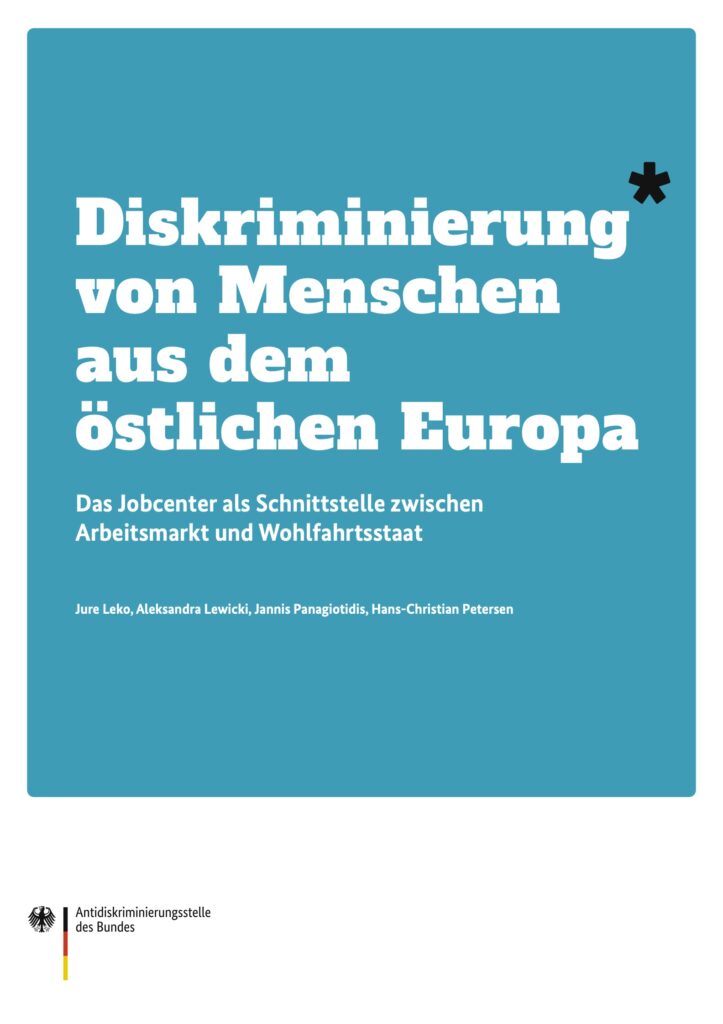
Discrimination Against People from Eastern Europe
Jure Leko, Aleksandra Lewicki, Jannis Panagiotidis, Hans-Christian Petersen; December 2025
Today, more than 9 million people from Central, Eastern, and Southeastern Europe live in Germany. They constitute the largest population group with a migration background in the country. Their migration to Germany dates back centuries—and anti-Eastern European discrimination has existed just as long.
Migration from Eastern Europe to neighboring Germany has a long history. However, it can hardly be described as an equal circulation of people, goods, and services. For more than a century, Germany has recruited “cheap” labor from the “East.” While people from Eastern Europe are often regarded in a global context as potentially “belonging to Europe,” within Europe they are frequently perceived as “second-class Europeans” (Lewicki 2023). As a result, migrants from various Eastern European countries may benefit from certain residence-related privileges within Germany’s immigration system, yet they remain disproportionately represented in precarious employment and low-wage sectors across generations.
Migration from East to West and the prevalence of precarious work are not merely the result of individual choices. Historically and today, they are enabled, restricted, and regulated through legal frameworks. Labor law, migration policy, and welfare-state mechanisms often interact in ways that are linked to longstanding stereotypes of Eastern European inferiority. These common assumptions contribute to disadvantages in various areas of public life.
The authors of this study understand this social positioning as the result of a specific form of racism that was historically projected onto the imagined figure of the “Slav” and is today directed at “Eastern Europeans.” In everyday life, this racism manifests itself through ambivalent forms of belonging that place people from Eastern Europe within complex racial hierarchies (Lewicki 2023). This is expressed both through generalized notions of “Eastern Europe” and through the hierarchical ranking of Eastern Europeans according to their perceived proximity to Western Europe.
On a structural and institutional level, anti-Eastern European racism is reflected in historically rooted inequalities. These inequalities manifest themselves in asymmetric divisions of labor and various forms of social disadvantage. Like other forms of racism, anti-Eastern European racism is a historically established yet constantly evolving interplay of ideology, structures, and social processes. Individuals and entire groups are assigned positions within hierarchies of value based on actual or attributed biological and/or cultural characteristics. These hierarchies are then used to justify unequal access to social and material resources (see Hall 1997; Essed 2020; Lewicki 2023; Panagiotidis/Petersen 2024).
The issue of anti-Slavic discrimination has long been overlooked. People with Eastern European migration backgrounds continue to experience racist stereotyping and are often broadly labeled as “poor,” “backward,” or “criminal.” The authors identify a range of contributing factors, including individual discrimination by employees of public institutions such as job centers, as well as institutional barriers such as the often slow recognition of foreign professional qualifications and the shortage of childcare places.
People from Eastern Europe do not end up in precarious employment because they lack motivation or are particularly suited to low-wage work. Rather, the study demonstrates that legal frameworks, labor market conditions, and political structures are often the underlying causes. Policymakers can—and must—take action to address these inequalities.
Annual Report 2025 of Germany’s Federal Anti-Discrimination Agency
In 2025, more than 13,000 discrimination-related inquiries were reported. This represents an increase of approximately 15 percent compared to the previous year. The most common reason people contacted Germany’s Federal Anti-Discrimination Agency (Antidiskriminierungsstelle des Bundes) was racial discrimination. Since 2021, the number of reported cases has risen continuously and has more than doubled. This alarming development is addressed as a special focus topic in this year’s report for the first time.
The second most frequently reported form of discrimination concerned disability or chronic illness. Here, too, the number of requests for advice increased, reaching a record high of more than 3,000 cases. The third most common category involved discrimination based on gender or gender identity. Gender-based discrimination also remained at a high level, with more than 2,400 consultation requests recorded.
With more than 3,600 cases (34 percent), the workplace was the area in which affected individuals most frequently experienced discrimination in 2025. People seeking advice reported issues such as discriminatory job advertisements, rejected applications, less favorable hiring conditions, and workplace bullying.
Cases involving discrimination in access to goods and services, including the housing market, accounted for approximately one-fifth of all inquiries. In the area of housing access, nearly 100 more cases were reported in 2025 than in 2024, representing an increase of around 25 percent.
People also increasingly reported discrimination within the healthcare and long-term care sectors. Compared to the previous year, the number of consultation requests in this area rose by almost 25 percent.
In more than 1,400 cases (approximately 14 percent), individuals reported experiencing discrimination by public offices and administrative authorities. A further 500-plus inquiries concerned discrimination in interactions with the judiciary and police.
In the field of education, more than 600 cases were reported, accounting for approximately 6 percent of all inquiries.
Being Muslim in the EU. Experiences of Muslims by FRA-European Union Agency for fundamental rights, Austria, 2024
In 2024, Muslims in the EU continue to face racism, hatred and discrimination in their lives. Muslims across the EU are increasingly experiencing racism and worrying about their safety. This is an undeserved and unwelcome reality for those who have come to see Europe as home, as well as for those who have lived in European countries for generations. In the long term, it can only result in a fading sense of security and belonging. European Union Agency for Fundamental Rights (FRA) data from the EU Survey on Immigrants and Descendants of Immigrants (2022) reveal a grim situation for the Muslim population in the EU. For more than 15 years, FRA research and data have shown that Muslims in the EU face discrimination, harassment and violence when looking for work or housing, when at work or when trying to access public or private services. This FRA’s latest report reveals the lived experiences of Muslims in the EU, collected in a survey of almost 10,000 Muslims, that was conducted between 2021 and 2022. The survey shows that racial discrimination against Muslims is increasing. Women, men, and children are victims of harassment and violence based on their religion, skin colour or ethnic background. Racial discrimination and racist harassment are happening on our streets, and in schools and workplaces. One of the most alarming aspects is how often it happens – it is now almost normalised.
Technical and quality report. EU Survey on Immigrants and Descendants of Immigrants (2022) by FRA-European Union Agency for fundamental rights, Austria, 2024
The survey and its predecessors EU-MIDIS (2008) and II (2016) paint a portrait of the experiences of discrimination and bias-motivated harassment and violence experienced by immigrants and ethnic minorities across Europe. They provide comprehensive, comparable data with which policy makers can address these high-priority agenda issues and most importantly assess progress over time as regards equality and non-discrimination in key areas of life. This survey builds on the previous EU-MIDIS surveys, focusing on the experiences of immigrants and descendants of immigrants from North Africa, African countries south of the Sahara, Syria (for the first time) and Türkiye. The design of the survey was based on background research and stakeholder and survey expert consultations and uses FRA’s extensive experience on surveying ‘hard-to-reach’ populations. This survey was implemented in 15 EU Member States. In nine Member States – Belgium, France, Greece, Ireland, Italy, Poland, Portugal, Spain and Sweden – the survey was conducted face-to-face. In Austria, Denmark, Finland, Germany, Luxembourg and the Netherlands the survey was conducted online using a push-to-web methodology.
Gender equality in Europe: a still imperfect model in the world
In a world where women’s rights are once again being challenged from all quarters, Europe remains the place where women live best. The principle of gender equality is one of the fundamental values of the European Union, laid down in the article 2 of the Treaty on European Union. Article 21 of the Charter of Fundamental Rights prohibits gender-based discrimination. However, there are still significant gender gaps in the European Union in the economic, political and social fields, and some setbacks, difficulties persist, and progress is still required to achieve true gender equality. Moreover, important European policies are on the agenda or have come into force in recent years to ensure that discrimination against women in Europe is reduced and that new forms of discrimination do not emerge. However, there is still a long way to go, particularly at global level, but also in Europe. With its comparative advantage, the European Union must ensure that any obstacles preventing European women from moving ahead are removed, because …their impatience is growing. And they are worth it!
Gender Equality Index 2022, The COVID-19 pandemic and care
The Gender Equality Index is a tool to measure the progress of gender equality in the EU, developed by the European Institute for Gender Equality (EIGE). It gives more visibility to areas that need improvement and ultimately supports policy makers to design more effective gender equality measures.
The Gender Equality Index has tracked the painfully slow progress of gender equality in the EU since 2010, mostly due to advances in decision-making. While equality is more pronounced in some Member States than in others, it is far from a reality for everyone in every area. Gender norms around care, gender segregation in education and the labour market, and gender inequalities in pay remain pertinent.
The Index allows Member States to easily monitor and compare gender equality progress across various groups of women and men in the EU over time and to understand where improvements are most needed. The 2022 Index has a thematic focus on care in the pandemic. It explores the division of informal childcare, long-term care and housework between women and men.
The Gender Equality Index score for the EU is 68.6 points out of 100. This marks an advance, but only just. Progress on gender equality is largely driven by the domain of power, which conversely has the greatest gender inequalities in the EU. Without this domain, the Index score would have fallen due to the impact of the COVID-19 pandemic.
European
Institute for Gender Equality, available for download as a PDF 3,7 MB
State of Democracy, Human Rights and the Rule of Law
In her annual report, published on the Council of Europe Day 2023, the Secretary General says the Organisation’s standards need to be applied across every aspect of Europeans’ lives.
The report looks at strengths and weaknesses in democratic institutions and focuses on the quality of the democratic environment, highlights challenges such as:
• increased violence against journalists, the use of surveillance to track and intimidate them and tactics ranging from detention to strategic lawsuits against public participation to prevent investigative journalists and others from doing their jobs;
• new laws and the misuse of existing ones to limit civil society, with public demonstrations wrongly classified as dangerous, excessive force used against demonstrators, non-governmental organisations faced with increased financial restrictions and bureaucratic hurdles, and the use of the legal system to undermine political opposition;
•a polarised political environment in which hate speech continues to grow, both online and offline, often targeting women and a range of minorities and vulnerable groups.
These negative trends are not found everywhere, and it is important to recognise that there also positive developments in some member states.
Report of the Secretary General of the Council of Europe, 2023, available for download as PDF 4,1 MB
Human rights report on the right to work
People with disabilities have the right to work
like all other people.
They should not be left out
because they have a disability.
However, in practice,
almost half of people with disabilities in Europe
do not have a job.
But even people with disabilities
who have a job:
• May get a lower salary
than people without disabilities
or no salary at all.
• May get jobs only for short times.
• May not be trusted to do jobs
of high skills or responsibilities.
• May be treated unfairly in their work.
• May work in workshops
away from the community.
Things are even harder
for women with disabilities,
young people with disabilities
and people with disabilities
who need more support in their every day lives.
It is even less likely for them to get a job.
COVID-19 made things much worse.
It had a bigger impact on people with disabilities
than on other people.
Due to COVID-19,
many people with disabilities lost their jobs
and struggle to earn enough money to live on.
European Disability Forum, Easy-to-read version, available for download as PDF 614,5 KB
The networks and narratives of anti-refugee disinformation in Europe
This report represents the findings of a study exploring digital manipulation around the refugee crisis throughout 2020. It seeks to outline the different online networks associated with anti-refugee disinformation and hatred in the Greek, German, and English languages, and the key narratives deployed by these networks. It is grounded in a network-first approach to analysis, exploring networks of accounts mentioning and being mentioned by social media channels identified as promoting anti-refugee disinformation and hatred. Through this approach the team identified a network of nearly 5,000 accounts associated with anti-refugee disinformation and hatred in Greek, German and English language, producing over 280,000 messages in 2020. An analysis of the content produced and shared by these networks evidences the ways these networks sought to mobilise in 2020 around key flashpoints, including tensions on the Greece/Turkey border at Evros in March, and fires in the Moria refugee camp at Lesbos in September. This research also demonstrates the interplay between political actors and extremists in the online ecosystems associated with anti-refugee disinformation and hatred.
Institute for Strategic Dialoge, London, 2021, available for download as PDF 7,0 MB
Fear and lying in the EU: Fighting disinformation on migration with alternative narratives
Migration remains a salient political issue and a major topic of disinformation. Lies and half-truths about migrants spread freely across the EU. But the narratives and themes used by disinformation actors are not static. As events develop and public concerns shift, so do the
types of stories pushed by those seeking to mislead. For example, the COVID-19 pandemic has led to a growing stream of articles linking migrants to infection risks and accusing them of receiving preferential treatment.
Disinformation actors have certain advantages over other communicators, as they can promote simplistic or one-sided depictions of migration without regard for truth or accuracy. Rather than seeking to counteract specific claims, such as through fact-checking or counternarratives, communicators and policymakers should instead promote alternative narratives that can undermine the appeal of hostile frames and create ‘herd immunity’ against disinformation. Alternative narratives should especially target those in the ‘movable middle’ who are most open to changing their views, especially as these groups may also be more liable to being influenced
by disinformation.
This Issue Paper examines nearly 1,500 news articles from four EU member states (Germany, Italy, Spain and the Czech Republic) published between May 2019 and July 2020. It shows that disinformation narratives about migration seek to exploit readers’ fears to polarise public opinion, manufacture discontent, sow divisions and set the political agenda. Disinformation actors link migration to existing insecurities, depicting it as a threat to three partly-overlapping areas: ° Health (migrants as violent criminals, potential terrorists, or a COVID-19 infection risk); ° Wealth (migrants as social benefits cheats, unfair competition for jobs, or a drain on community resources); ° Identity (migrants as a hostile invasion force, a threat to European or Christian traditions, or the subject of a conspiracy to replace white Europeans).
Rather than trying to counter disinformation stories about migrants directly, communication professionals and policymakers must instead promote alternative narratives that undermine the appeal of messages that incite fear and rage, and reframe the debate on migration entirely.
This is the conclusion of a collaborative research project between the Foundation for European Progressive Studies, the European Policy Centre, the Friedrich-Ebert-Stiftung and the Fundación Pablo Iglesias. Its aim was to identify and analyse misleading and hostile narratives on migration in Europe and formulate concrete recommendations on how to tackle them. The authors examined nearly 1,500 news articles from four EU member states (Germany, Italy, Spain and the Czech Republic), published between May 2019 and July 2020.
Disinformation narratives are so successful because disinformation actors link migration to existing insecurities, depicting it as a threat to three partly-overlapping areas: health (migrants as violent criminals, terrorists or carriers of disease), wealth (migrants as social benefits cheats or unfair competition for jobs) and identity (migrants as a hostile invasion force, threatening to replace white, Christian Europeans and their traditions).
Issue Papier, European Migration and Divercity Programme, European Politics and Institutions Programme, Paul Butcher, Alberto-Horst Neidhardt, 26 November 2020, available for download as PDF 5,5 MB
The impact of disinformation campaigns about migrants and minority groups in the EU
This analysis, commissioned by the European Parliament’s Special Committee on Foreign Interference in all Democratic Processes in the European Union, including Disinformation (INGE), aims to explore the impact of disinformation activity originated or amplified from abroad targeting minorities in the EU over the years 2018-2021. While disinformation has become all-pervasive, it can be considered as yet another tool being used to target vulnerable groups in society. Looking at recent disinformation campaigns that ethnic, religious and cultural minorities have been subjected to, this study finds both direct and indirect links between disinformation and fundamental rights, such as human dignity or physical and mental integrity, along with core European values, including equality, the rule of law and solidarity. The Roma are found to be victims of domestic disinformation, while migrants and the Jewish community are targeted by the Kremlin. The research found that disinformation by foreign and
domestic actors as well as disinformation and organic content are increasingly merging, rendering measures to stop foreign disinformation more difficult.
In-depth Analysis, European Parliament coordinator: Policy Department for External Relations
Directorate General for External Policies of the Union, Judit SZAKÁCS, Éva BOGNÁR, June 2021
available for download as PDF 840,9 KB